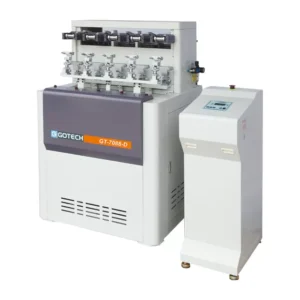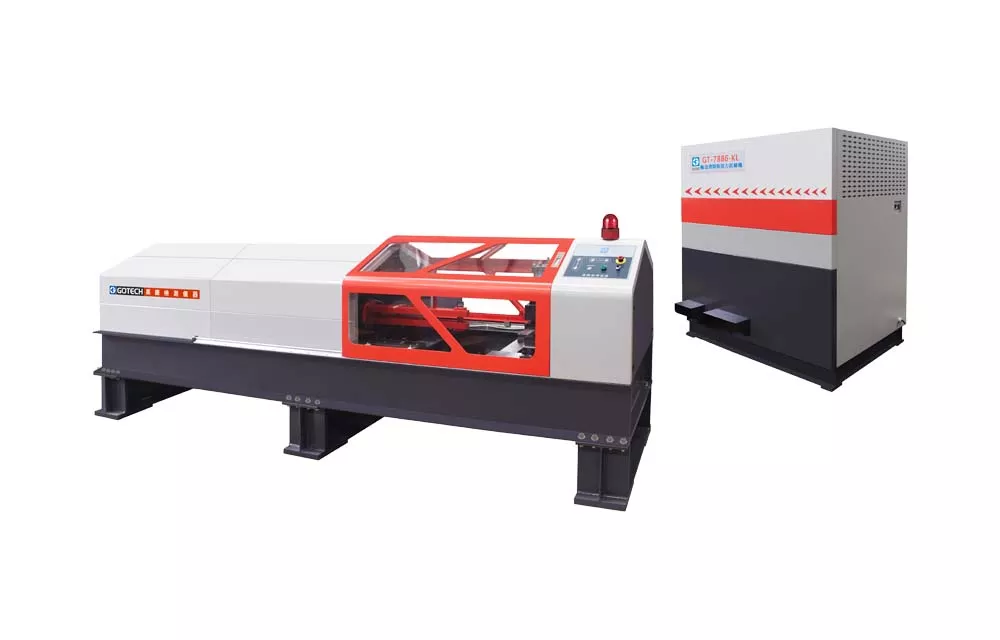
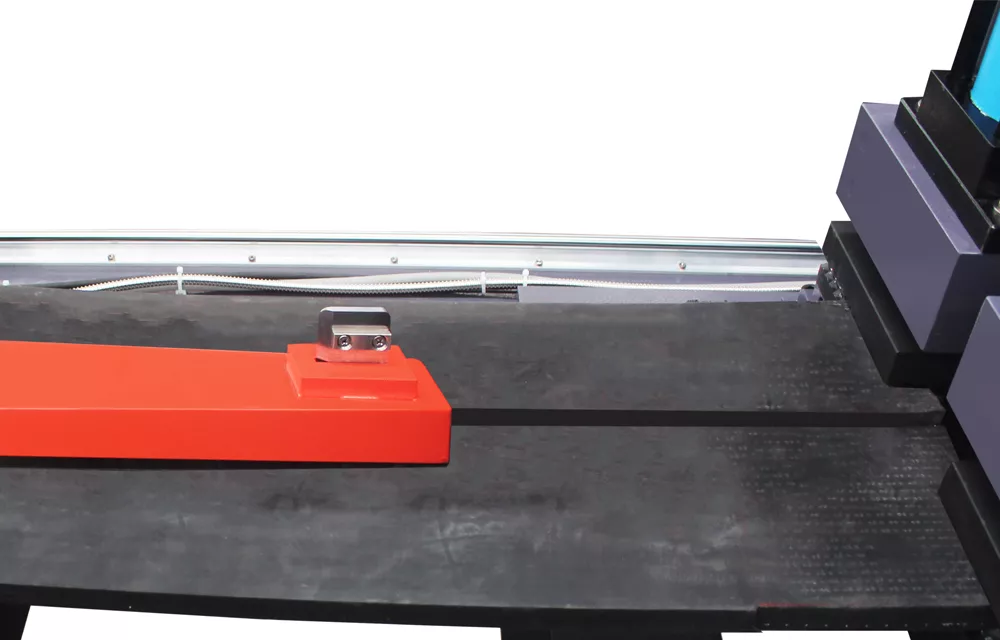
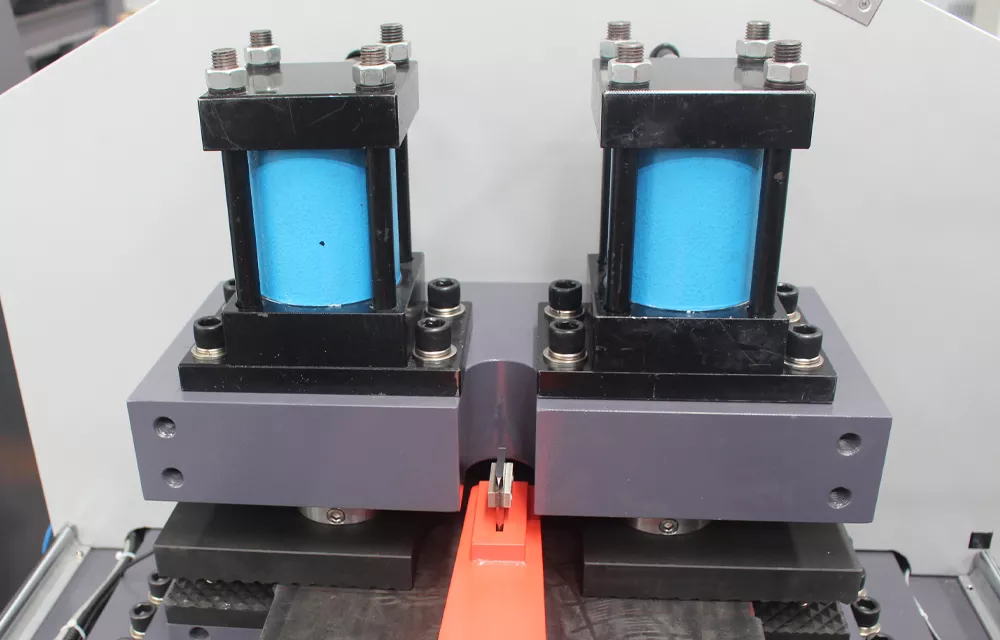
The specimen is fixed on the clamp of the testing machine, the cutter is inserted into the pre-cut opening and fixed on the cutter holder, the cutter holder and the clamp move at a specified relative speed, so that the cutter cuts the specimen, and the tensile force (i.e. cracking resistance) curve applied to the specimen by the testing machine during the test is recorded.
In addition to conveyor belts, this testing machine can also be used for other elastic materials with similar crack resistance requirements, such as rubber products and strip materials.
The test measures the cracking resistance of the conveyor belt material when subjected to external cutting force. Cracking resistance refers to the maximum tensile force that the conveyor belt can withstand when it is cut.
Provide a reliable specimen holder to fix the conveyor belt specimen on the testing machine to ensure the stability of the specimen during the test.
Equipped with dedicated cutting tools, it simulates cutting scenarios that conveyor belts may encounter in real-world applications, such as objects getting stuck in the conveyor belt or mechanical equipment operation.
During the test, the tensile force (i.e. cracking resistance) curve of the sample will be recorded to obtain a detailed understanding of the cracking performance of the conveyor belt.
It provides the ability to analyze test data, assess the cracking resistance of conveyor belts, and compare the performance of different samples.
In the research and development stage of new materials, this testing machine can provide timely feedback on the cracking performance of materials, helping to optimize material formulations.
This ensures that products comply with relevant industry standards and regulations, reducing risks and improving product compliance in the market.
The conveyor belt crack resistance tester has significant application value in ensuring conveyor belt quality, compliance with standards, and conducting new material research. It provides comprehensive and reliable assessments, helping to ensure that conveyor belt materials meet requirements and improving product reliability and safety.
If you have any further questions or needs regarding the conveyor belt crack resistance tester or other related equipment, please feel free to contact us.
We are dedicated to providing you with professional support and solutions.
The operating software for high-speed rail testing instruments is independently developed. The computerized operating interface allows for flexible setting of test parameters to meet the requirements of different applications and standards.
It can monitor and record data in real time during the testing process, allowing users to understand the progress and results of the test in a timely manner.
It has multiple built-in safety features, such as a safety shield and an emergency stop button, to ensure safety during operation.
| Display method | Leader II computer system | |
| capacity | 5 tons | |
| Unit selection | kg、LB、N、kN、Psi、MPa等 | |
| Load decomposition | 1/200,000 | |
| Load accuracy | Within ±0.5% | |
| Tool holder test speed | (1.5~3.5)m/sec | |
| Computer software | Leader II (Traditional Chinese, Simplified Chinese, and English versions) | |
| Test trip | 900mm | |
| Volume (approximately) | host | 440 cm × 95cm × 141 cm(W×D×H) |
| hydraulic system | 194cm ×106cm ×168cm (W×D×H) | |
| power supply | 3-phase 380V (depending on country or specific requirements) | |
Villa Payung Indah B 27, Jawa Tengah, Pudakpayung, Kec. Banyumanik, Kota Semarang, Jawa Tengah 50265
Copyright 2023 Amtast Multisado